- Home >
- Content design portfolio >
- User journeys
User journeys
Having managed content workflows, communications campaigns and digital development in a range of environments, I’ve conceptualised, visualised and mapped core user journeys across complex websites and multichannel digital services. Below are some examples of how I’ve used this to collaborate with multidisciplinary teams to develop user-focused digital experiences.
Journey mapping & visualising end-to-end user journeys
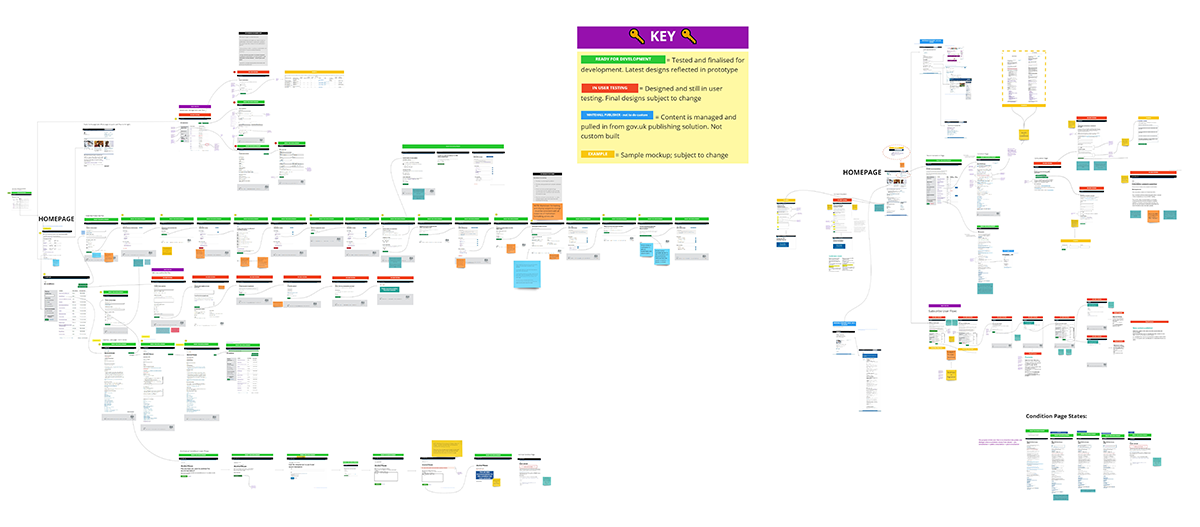
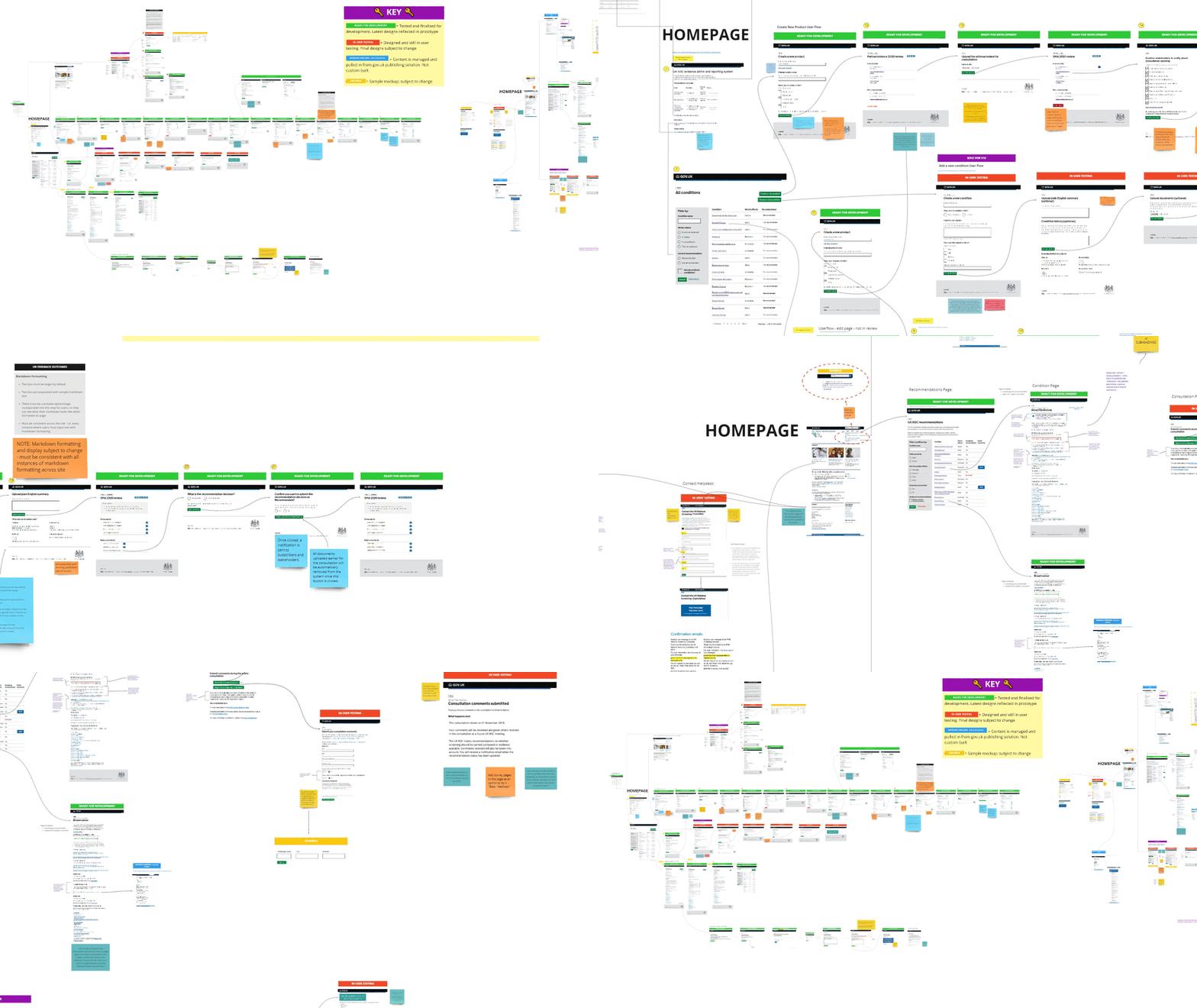
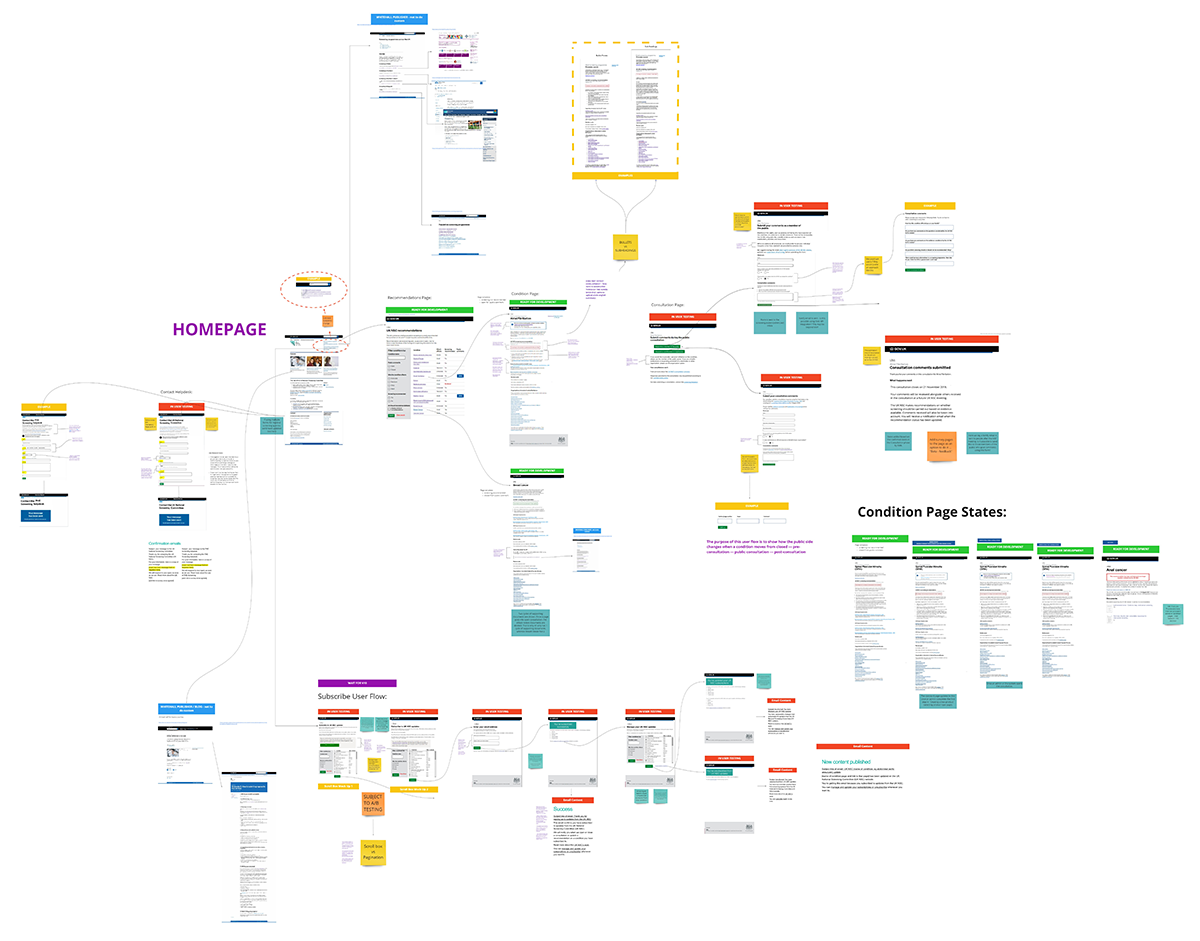
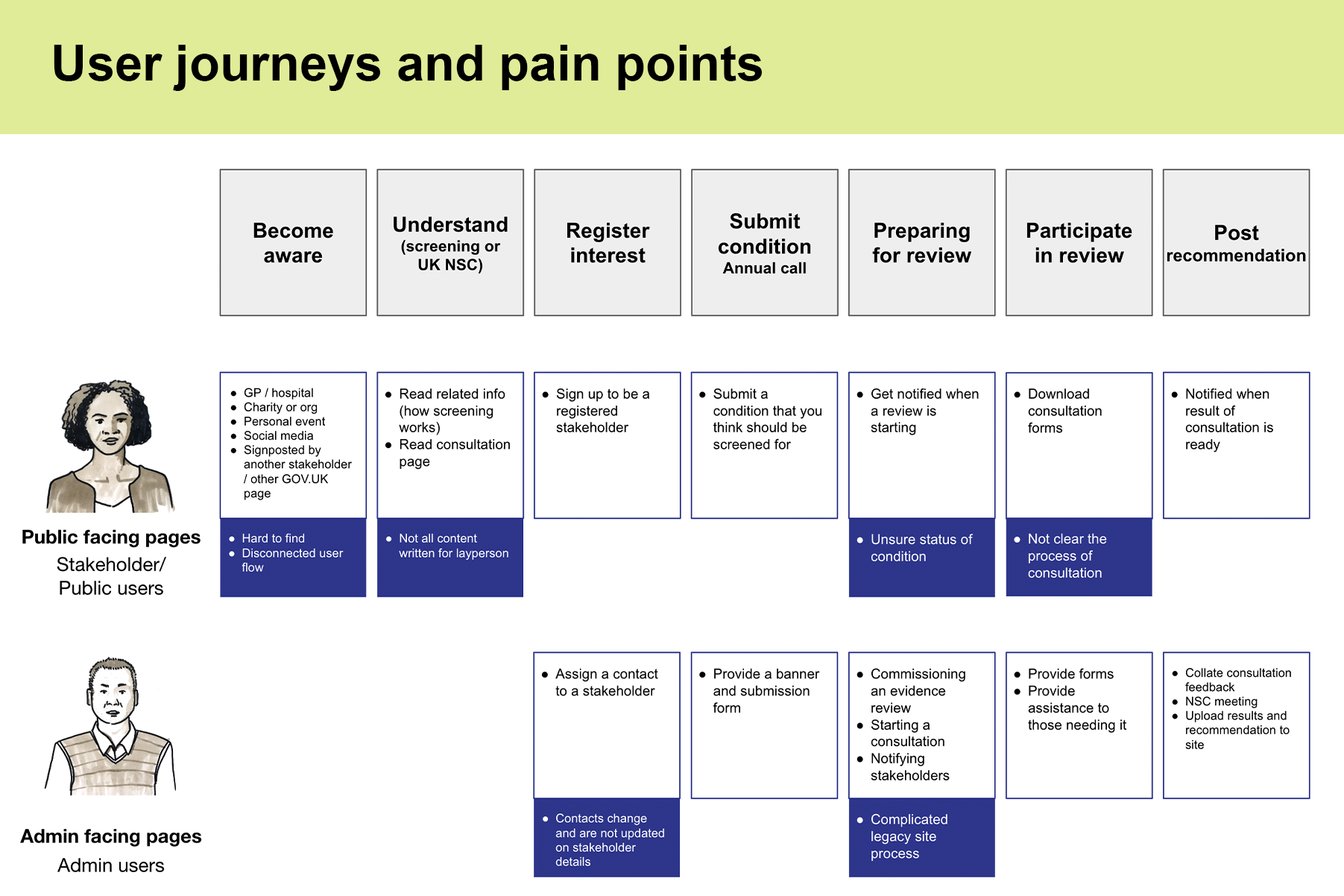
As an essential part of digital service development and content design, journey mapping involves thinking about end-to-end user journeys, and how users interact with content at different touchpoints of a service. While coordinating the delivery of the UK National Screening Committee’s (UK NSC) GOV.UK digital service, I managed our journey mapping and journey visualisation using Miro. Doing this allowed content designers, developers and user researchers to visualise macro-level user journeys and collaborate on content strategy in the core areas of the websites we were developing. It also allowed us to show in real time which stage of development each new feature or design was in. I kept our collaborative Miro board up-to-date alongside prototyping new designs, and it became an essential resource for our contracted developers to understand the layout and design of the website when it came time to build in production ahead of our public beta launch.
You can see a few examples of user journeys I mapped for both the public and admin side of the UK NSC’s digital service below:
Defining user groups & thinking about user needs
In the above example, it was essential to use our user personas to segment different user groups when thinking about content design, user research, and the different user needs and user journeys that inform the development of the service. Defining these user groups meant drawing up user needs, and developing user stories to better understand the different users of the service. In this project, the three main user groups were a) stakeholders with an active interest in the activities of the UK NSC; b) members of the public with an interest in population screening; and c) evidence review managers who used the admin back-end of the website to fulfil the remit of the committee.
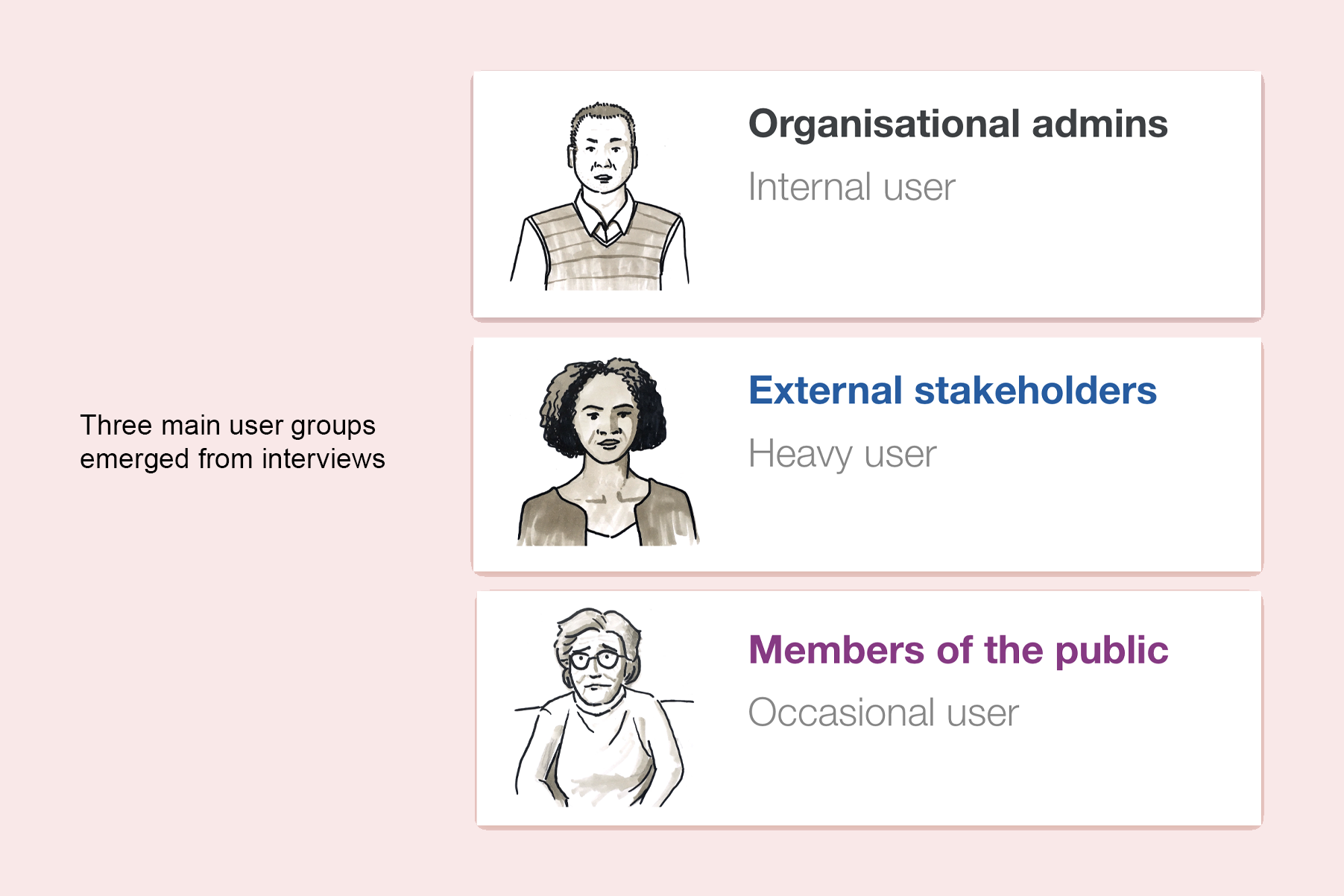
Keeping the nuances and differences between these different user groups in mind was essential to our remit of developing effective content and showing users the content they need most at the right time and in the best format possible.
Developing user personas for effective web campaign targeting
Another example of working with user groups is during my time managing Picfair’s image library. I regularly worked with our campaign manager to develop targeted web campaigns aimed at growing our image library, through connecting with different types of photographers and image agencies who might be interested in contributing to our library.
While Picfair’s core user groups can be split between those who buy images and those who sell them, I needed to further break down the different user types within the image selling user group. For this, I used my knowledge of our library and different types of photographers within the industry to segment our users into a) large professional image agencies who would be contributing significant amounts of creative content to our library, and expect a professional and attentive service while onboarding; b) professional individual photographers who would be contributing medium levels of creative content to our library, and expect a professional and attentive service while onboarding; and c) amateur photographers who would be contributing low levels of creative content to our library, and expect a more self-service approach while onboarding.
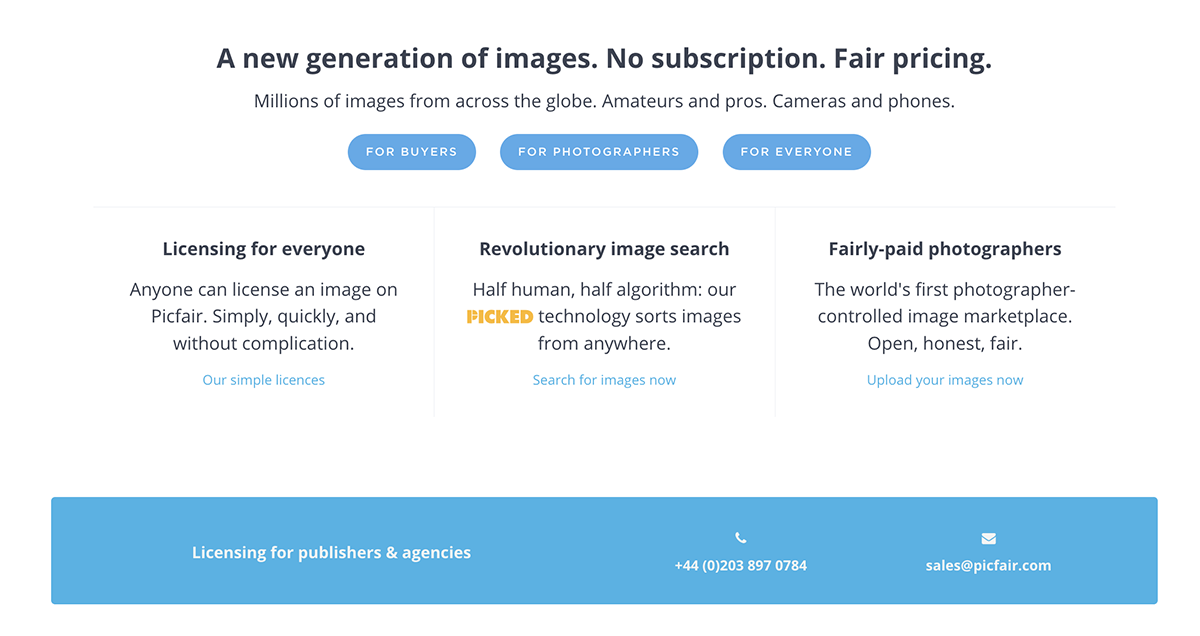
Having defined the main user groups I wanted to target in our communications campaigns, I then discussed the different technical requirements of onboarding we’d need with our development team. This included considerations like custom metadata ingestion tools and automated quality assurance for larger image collections. Once we knew our technical environment was prepared for onboarding our different user types, I then collaborated with our campaigns manager to develop specific and targeted communications materials based on the needs and expectations of each user group.
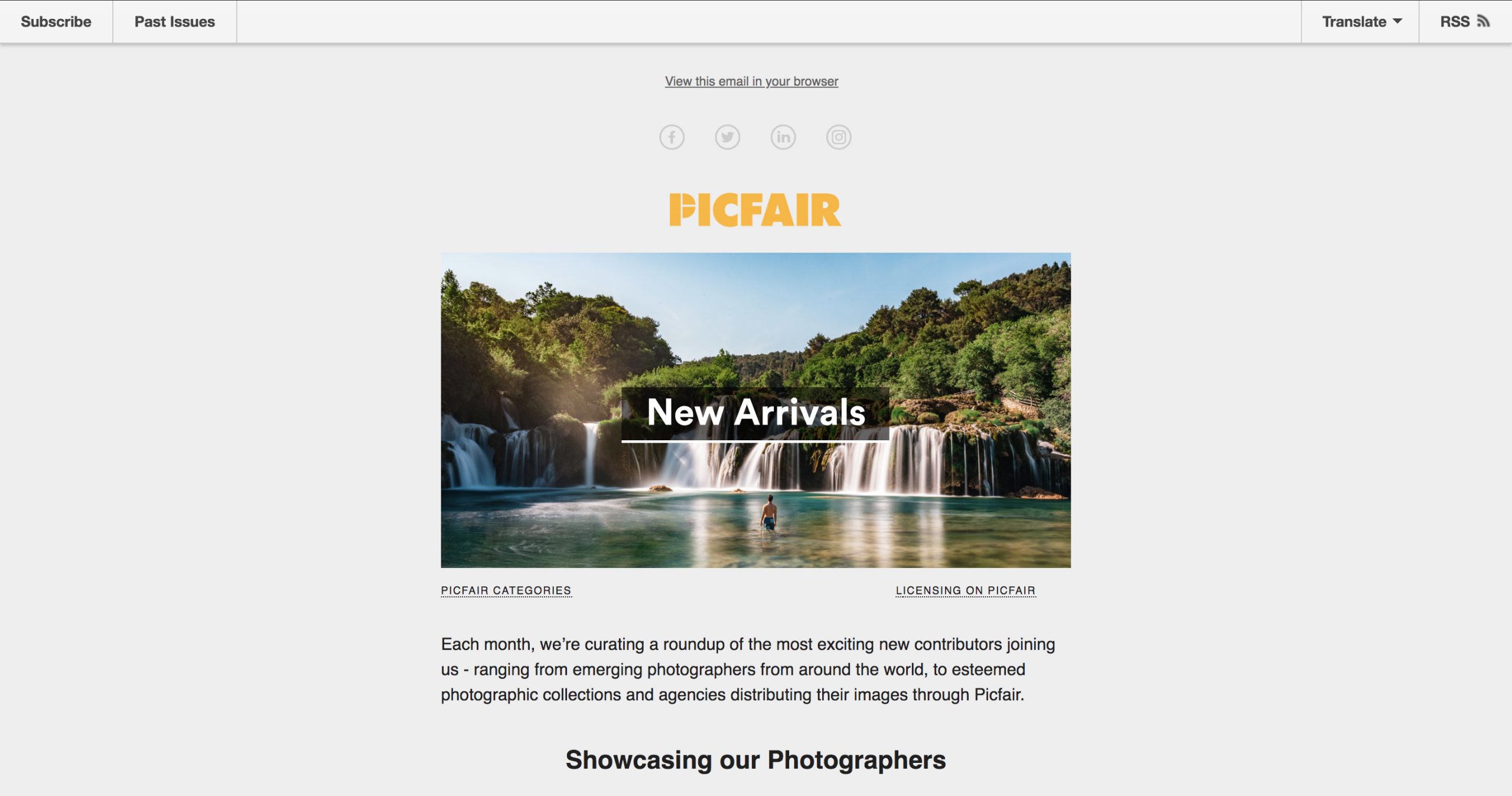
Using a considered mixture of web, email and social media marketing, we were therefore able to customise each campaign around the requirements of each user group, and show users specific landing pages and marketing collateral accordingly. The result was a significant uptake in user onboarding across the board, with a 200% increase in quality library material month-on-month. It also gave us the ongoing ability to run more strategic and targeted marketing campaigns based on changing organisational needs.